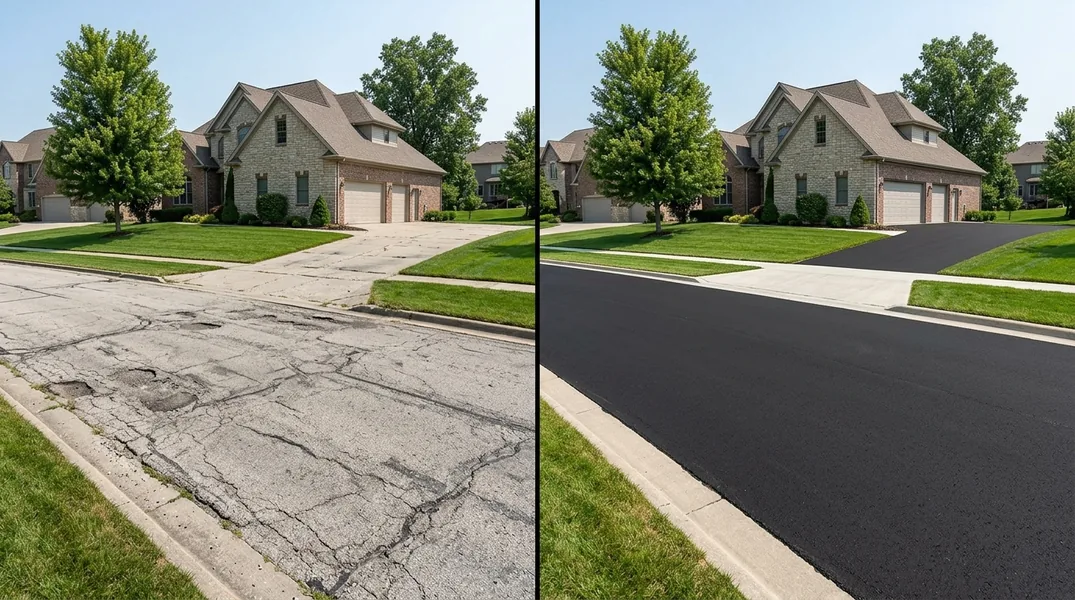
Asphalt vs Concrete Driveway: Understanding the Basics
When homeowners in Des Moines face the decision between asphalt and concrete driveways, they're often thinking about durability, cost, and how well each material will handle the region's challenging climate. Both materials have distinct advantages and drawbacks, and the right choice depends on your specific needs, budget, and long-term maintenance expectations.
Asphalt is a flexible, dark-colored material composed of bitumen and aggregate. Concrete is a rigid, light-colored surface made from cement, water, and aggregates. These fundamental differences in composition directly influence how each material responds to temperature fluctuations, moisture, and the harsh chemicals used on Des Moines roads during winter months. Understanding these distinctions is the first step toward making an informed decision for your home.
How Frost Damage Affects Asphalt and Concrete
Frost damage is one of the most significant concerns for driveway owners in cold climates like Des Moines. When water seeps into cracks and the temperature drops below freezing, the water expands and creates pressure that can widen cracks and cause surface deterioration. This freeze-thaw cycle is relentless during winter, and both asphalt and concrete are vulnerable, but in different ways.
Asphalt is more forgiving when it comes to frost damage because of its flexibility. The material can expand and contract with temperature changes without cracking as easily as concrete. However, asphalt does develop cracks over time, and once water penetrates those cracks, frost heave can occur. The good news is that Asphalt Driveway Paving & Installation specialists can address these issues with timely Pothole Repair & Asphalt Patching before frost damage becomes severe.
Concrete, being rigid, is more prone to cracking under freeze-thaw stress. When moisture enters concrete through small pores or existing cracks, freezing temperatures cause the water to expand with tremendous force. This expansion breaks the concrete from within, leading to spalling (surface flaking) and wide cracks that are difficult to repair. Once concrete cracks, the damage spreads quickly during subsequent winter cycles, making preventive maintenance crucial.
Road Salt and Chemical Damage: Asphalt vs Concrete
Road salt is essential for winter safety, but it's brutal on driveways. The Iowa Department of Transportation and local municipalities apply salt liberally to keep roads passable, and that same salt gets tracked onto your driveway. The chemical reaction between salt and driveway materials differs significantly between asphalt and concrete, affecting their longevity and maintenance needs.
Asphalt is relatively resistant to salt damage because salt doesn't chemically bond with bitumen the way it does with concrete. However, salt can accelerate the oxidation process in asphalt, causing it to become brittle and more susceptible to cracking. The real danger comes when salt-laden water penetrates cracks and reaches the base layers beneath the asphalt. Over time, this can weaken the structural integrity of your driveway. Regular sealcoating helps protect asphalt from salt penetration and extends the Des Moines asphalt driveway lifespan significantly.
Concrete, on the other hand, is highly susceptible to salt damage through a process called salt scaling. Salt crystals form on the concrete surface and beneath it, causing the top layer to peel and flake away. This damage is often irreversible and accelerates with each winter season. Additionally, salt can penetrate concrete and reach the reinforcing steel beneath, causing corrosion that further compromises the structure. Homeowners with concrete driveways in salt-heavy regions often face more expensive repairs and shorter overall lifespan compared to properly maintained asphalt.
Asphalt Over Concrete Driveway: A Practical Solution
Some homeowners ask whether they can place asphalt over an existing concrete driveway. The answer is yes, but with important caveats. Asphalt Resurfacing & Overlay can be a cost-effective way to extend the life of a damaged concrete driveway, provided the concrete is still structurally sound and the underlying base is stable.
The process involves cleaning the concrete surface, filling any large cracks or holes, and applying a tack coat before laying new asphalt on top. This approach works well when concrete has minor to moderate damage but hasn't failed completely. The asphalt overlay protects the concrete from further salt and frost exposure while giving your driveway a fresh, dark appearance. However, if the concrete has severe structural issues, underlying settling, or extensive cracks, laying asphalt over it is only a temporary fix. The problems below will eventually cause the new asphalt to fail as well.
For homeowners in Des Moines considering this option, it's essential to have a professional evaluation first. Des Moines Asphalt Paving can assess your existing concrete and recommend whether an overlay makes sense for your situation or if a complete removal and new installation is the better long-term investment.
Asphalt Driveway Lifespan: What to Expect in Des Moines
The typical asphalt driveway lifespan ranges from 15 to 20 years under normal conditions, but in a climate like Des Moines with harsh winters and frequent freeze-thaw cycles, you can extend that timeline significantly with proper maintenance. Concrete driveways often last 25 to 30 years, but the quality of that lifespan is often compromised by salt damage and spalling that makes them unsightly and unsafe long before they fail structurally.
The key to maximizing your asphalt driveway lifespan is preventive maintenance. Sealcoating every two to three years protects the surface from oxidation, salt, and moisture penetration. Prompt attention to cracks and potholes through Driveway Repair services prevents small problems from becoming expensive ones. Regular cleaning to remove salt buildup also helps preserve the material. Asphalt that receives consistent care can easily reach 20 to 25 years of reliable service, and some well-maintained driveways last even longer.
Concrete, while potentially longer-lasting in theory, often deteriorates faster in Des Moines due to salt damage. By the time a concrete driveway reaches 20 years, it may be heavily spalled, cracked, and unsafe. Repairs are limited and expensive. This is why many property owners in the region are switching to asphalt or choosing asphalt for new installations. The material is forgiving, cost-effective, and performs better in freeze-thaw environments when properly maintained.
Blacktop Driveway Maintenance: Protecting Your Investment
A blacktop driveway (another term for asphalt) requires proactive maintenance to withstand Des Moines winters. The most important step is sealcoating, which creates a protective barrier against UV rays, water, and salt. Without sealcoating, asphalt oxidizes and becomes gray and brittle within a few years. With regular sealcoating, your blacktop stays dark, flexible, and resistant to damage.
Beyond sealcoating, keep your blacktop driveway clear of standing water and salt accumulation. After winter storms, sweep away salt residue and ensure proper drainage so water doesn't pool on the surface. Inspect your driveway regularly for small cracks and address them immediately. Filling cracks with crack filler is inexpensive and prevents water from penetrating deeper into the asphalt layers. If you notice potholes or significant damage, contact Des Moines Asphalt Paving at (515) 461-7206 to schedule repairs before the problem worsens.
For concrete driveways, maintenance is more limited. You can seal concrete to reduce salt penetration, but once spalling and deep cracking begin, repairs are difficult and often cosmetic rather than functional. Many homeowners find that replacing a failing concrete driveway with new asphalt is more economical and practical than attempting repairs. If you're unsure about your driveway's condition or maintenance needs, contact Des Moines Asphalt Paving for a professional assessment and free estimate.
Looking for a professional asphalt paving contractor in Des Moines? Des Moines Asphalt Paving responds fast for all your asphalt paving needs.
Get a Free Quote