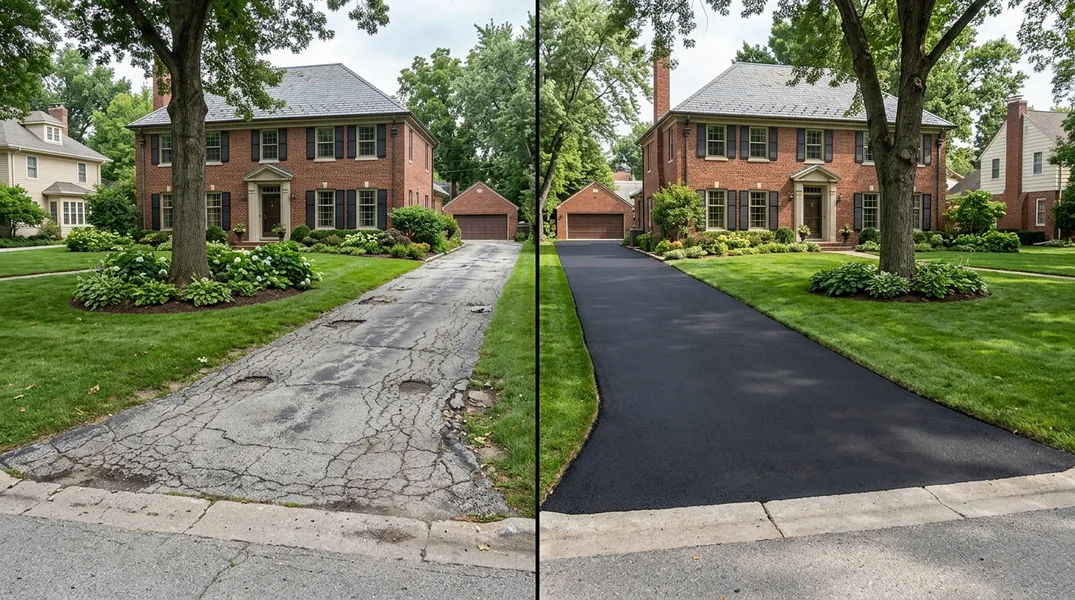
Why Driveway Drainage Matters in Des Moines
If you own a home in Des Moines, you know our winters are unforgiving. The combination of Iowa's heavy spring rains, summer thunderstorms, and freeze-thaw cycles creates a perfect storm for driveway damage. When water pools on your asphalt and freezes, it expands beneath the surface, cracking and buckling your pavement from the inside out. What starts as a small puddle in October becomes a pothole by February.
The problem is especially acute on Des Moines clay soil. Our region's heavy, compacted clay doesn't drain naturally. Water sits on the surface and seeps into asphalt seams rather than flowing away. This is why proper driveway drainage solutions aren't optional in our climate; they're essential preventive maintenance. Without them, you'll face costly Driveway Repair work within just a few years.
Understanding Water Pooling on Your Driveway
Water pooling on asphalt happens when your driveway doesn't have adequate slope or when surrounding grade directs runoff toward your pavement instead of away from it. Many homeowners assume a slight puddle is harmless, but water pooling on driveway surfaces is a silent killer. Even shallow standing water penetrates micro-cracks in asphalt, weakening the base layer. When temperatures drop below freezing, that water expands with tremendous force, pushing up from underneath and creating the cracks and potholes you see in spring.
The issue compounds over time. Each freeze-thaw cycle widens existing cracks, allowing more water to penetrate deeper. By the time you notice visible damage, the structural integrity of your driveway is already compromised. This is why addressing pooling water early, before winter arrives, is far more cost-effective than waiting for damage to appear. A properly graded driveway with good drainage can last 15 to 20 years, while one plagued by water problems may need replacement in half that time.
Driveway French Drain Systems: How They Work
A driveway french drain is one of the most effective solutions for managing water on clay soil. Unlike traditional surface drainage, a French drain works by collecting water below or at the edge of your driveway and channeling it away through a perforated pipe buried in gravel. The system uses gravity and the natural flow of water to move moisture away from your asphalt before it can pool or seep into the pavement base.
The installation process involves excavating a trench along one or both sides of your driveway, laying a perforated PVC pipe, surrounding it with drainage rock, and capping it with landscape fabric to prevent soil clogging. Water enters the pipe through its perforations, travels through the gravel bed, and exits at a downslope location where it can safely drain into your yard, storm drains, or a dry well. For many Des Moines homeowners with clay soil, a French drain solves pooling problems permanently. The system is hidden from view once installed, so it doesn't detract from your home's curb appeal.
Trench Drain Systems: A More Aggressive Approach
When water pooling is severe or your driveway sits in a low spot, a trench drain driveway system may be the better choice. A trench drain is wider and shallower than a French drain, running across the width of your driveway or along its length. It features a visible or semi-visible channel with a grate or slotted cover that allows water to flow directly into the drain system. This approach is particularly effective for driveways where water collects in specific problem areas rather than across the entire surface.
Trench drains are commonly used at the base of driveways where they meet the street, or across the middle of long driveways where a low spot develops. The system can handle higher water volumes than a French drain, making it ideal for properties with significant slope challenges or heavy runoff from roofs and surrounding areas. While more visible than a French drain, modern trench drain grates blend well with asphalt and require minimal maintenance compared to other drainage methods.
Proper Driveway Grading and Slope Solutions
Before investing in a French or trench drain, it's worth evaluating whether your driveway's grade is the real culprit. A properly installed driveway should slope away from your home and adjacent structures at a rate of about one-eighth inch per foot. This gentle slope is barely noticeable to the eye but ensures water naturally flows away rather than pooling. If your driveway was installed incorrectly or has settled unevenly over time, you may have reversed slopes or flat spots that trap water.
Correcting grade problems can involve Asphalt Resurfacing & Overlay work, which adds a new layer of asphalt with proper slope to your existing driveway. This is less invasive and less expensive than full replacement, and it solves the pooling problem while extending your driveway's lifespan. In some cases, combining better grading with a French drain gives you maximum protection against water damage. The key is addressing the root cause of pooling, whether that's poor slope, clay soil, or both.
Getting Professional Help: Driveway Drainage Solutions Near You
While understanding drainage principles is helpful, designing and installing a system that actually solves your specific problem requires expertise. Soil conditions, slope, water volume, and local drainage codes all factor into the right solution. Des Moines Asphalt Paving has years of experience diagnosing drainage issues on clay soil and installing driveway drainage solutions that work year-round. We evaluate your property, identify where water is pooling and why, and recommend the most cost-effective approach for your situation.
Whether you need a French drain, trench drain, grading correction, or a combination approach, we handle the entire project from design through completion. We're familiar with Des Moines soil and weather conditions, and we know what works in our climate. If you're noticing pooling water on your driveway, don't wait for winter to arrive. Contact Des Moines Asphalt Paving today at (515) 461-7206 to schedule a free estimate. We'll assess your drainage situation and show you exactly what's needed to protect your investment.
Looking for a professional asphalt paving contractor in Des Moines? Des Moines Asphalt Paving responds fast for all your asphalt paving needs.
Get a Free Quote